
Experts in Obsessive-Compulsive and Related Disorders
Chad Wetterneck, Ph.D.
Consultant and Trainer
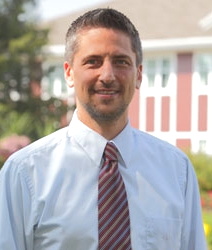
Chad Wetterneck, Ph.D. is a provider of expert treatment to adults and adolescents with obsessive-compulsive disorder (OCD) at Rogers Behavioral Health. He is also an expert in related disorders, including tic disorders (Tourettes Syndrome) and compulsive hair-pulling (trichotillomania). Although trained as a cognitive-behavioral therapist, Dr. Wetterneck has extensive experience with a number of behaviorally-related treatments such as Acceptance and Commitment Therapy, Functional Analytic Psychotherapy, Schema Therapy, and Dialectical Behavior Therapy.
Located in Oconomowoc, Wisconsin, Dr. Wetterneck, is a Director, Cognitive Behavior Specialist, and Clinical Supervisor at Rogers Behavioral Health. He is also an Adjuct Professor at the Marquette University where he teaches courses. He received six years of training at two of the leading OCD residential/inpatient treatment programs, Rogers Memorial Hospital and the Menninger Clinic. He has authored over 40 scientific articles on OCD, OC-spectrum conditions, and sexual thoughts (in normal and clinical populations).
He is a professional member of the International OCD Foundation (IOCDF), the Anxiety & Depression Association of America, the Association for Behavioral and Cognitive Therapies, and the Association for Contextual Behavioral Science.
Book for Treating Sexually-Themed OCD
Oxford University Press
Sexual obsessions in OCD are frequently misdiagnosed, even by licensed psychologists. Thus it is vitally important that people with sexual obsessions in OCD be treated by an experienced and effective OCD therapist.
Sexual Obsessions in OCD: A Step-by-Step, Definitive Guide to Understanding, Diagnosis, and Treatment
by Monnica T. Williams, Ph.D., ABPP & Chad T. Wetterneck, Ph.D.
Learn more about this important issue in OCD or order the book today from Amazon.com.

Selected Journal Article Publications
Wetterneck, C. T., Rouleau, T. M., Williams, M. T., Vallely, A., La Torre, J. T., & Bjorgvinsson, T. (in press). A new scrupulosity scale for the Dimensional Obsessive-Compulsive Scale (DOCS): Validation with clinical and non-clinical samples. Behavior Therapy.
Williams, M. T., Ching, T. H. W., Tellawi, G., Siev, J., Dowell, J., Schlaudt, V., Slimowicz, J., & Wetterneck, C. T. (2018). Assessing sexual orientation symptoms in obsessive-compulsive disorder: Development and validation of the Sexual Orientation Obsessions and Reactions Test (SORT). Behavior Therapy, 49 (5), 715-729 doi: 10.1016/j.beth.2017.12.005
Wetterneck, C. T., Williams, M. T., Tellawi, G., & Bruce, S. (2015). Obsessions of suicide in obsessive-compulsive disorder with comorbid major depressive disorder. In Clinical Handbook of Obsessive-Compulsive and Related Disorders: A Case-Based Approach to Treating Pediatric and Adult Populations. Springer.
Wetterneck, C. T., Siev, J., Smith, A. H., Adams, T. G., & Slimcowitz, J. (2015). Assessing sexually intrusive thoughts: Parsing unacceptable thoughts on the Dimensional Obsessive-Compulsive Scale. Behavior Therapy, 46, 544-556.
Wetterneck, C. T., Lee, E. B., Hart, J. M., & Smith, A. H. (2013). Courage, self-compassion and values in obsessive compulsive disorder. Journal of Contextual Behavioral Science, 2, 68-73.
Wetterneck, C. T., Little, T. E., Rinehart, K., Cervantes, M. C., Hyde, E., & Williams, M. (2012). Latinos with obsessive-compulsive disorder: Mental healthcare utilization and inclusion in clinical trials. Journal of Obsessive Compulsive & Related Disorders, 1, 85-97.
The Impact of OCD
How Can BWC Help?
Our group of caring clinicians can offer the Gold Standard in treating OCD, Exposure and Response Prevention (ERP). Reach out to one of our client intake coordinators to learn more about how this may help you!
Lasting Relief
At the Behavioral Wellness Clinic, our approach is simple: to provide strategies which can be used lifelong. This means that after your initial treatment, we will continue to provide follow-up care, but will also strive for you to be empowered within your own care and life.